









by Curlan Campbell
- Blue Economy team handled reapplication process
- Government expected to implement additional measures to ensure compliance with international standards
- Fisheries Division exploring use of vessel monitoring technology
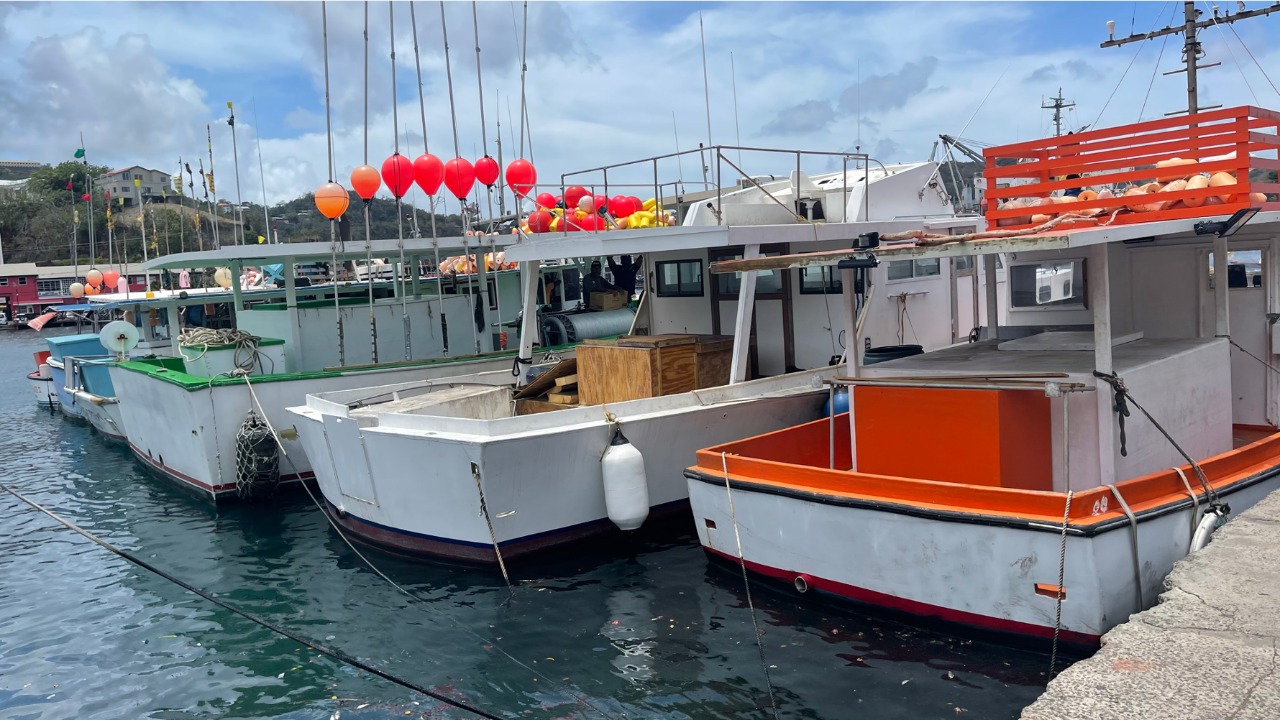
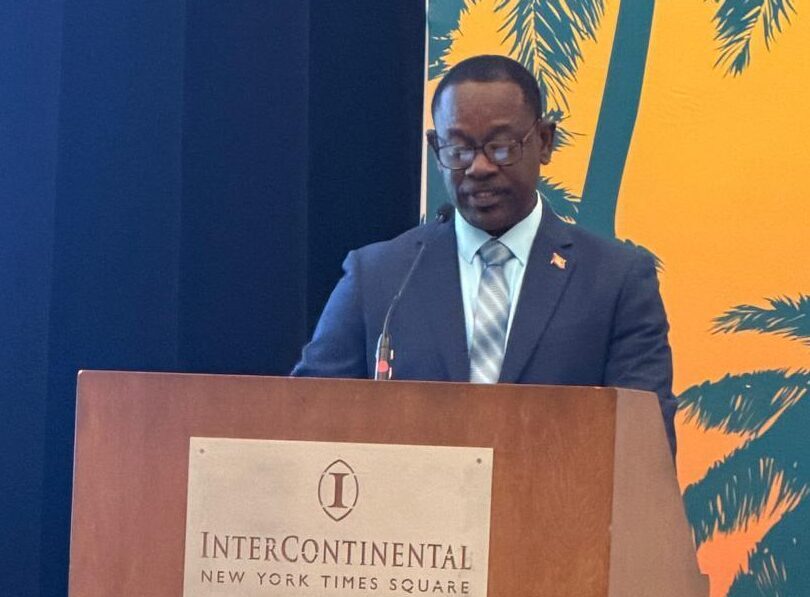
Minister for Economic Development and the Blue Economy Hon. Lennox Andrews announced a breakthrough for Grenada’s fisheries sector, confirming that a key international prohibition affecting local fishers has been lifted through to the end of 2029.
Reading from official correspondence, Minister Andrews explained that the previous restrictions stemmed from requirements under the United States Marine Mammal Protection Act (MMPA), which governs how countries export fish and fish products to the US. The approval grants Grenada clearance to continue exporting fish and fish products to the US through the end of the decade.
Speaking at the Post Cabinet briefing, Minister Andrews described the development as a significant achievement for the country, while cautioning that continued diligence will be required to maintain the status. “So essentially, there are really and truly two main issues coming out of this letter,” Andrews said. “The first, and to put simply, is that the prohibition has been lifted, and that lifting of the prohibition remains in effect until December 31, 2029… and therefore, what that means is that our fisherfolks can now go to sea and continue fishing.”
The minister emphasised that securing this outcome required swift and coordinated action across multiple agencies and partners. “Achieving this goal was no easy task. It required action with alacrity to set up a task force with specific remits and to collaborate with a number of people and institutions on a constant basis, as well as monitoring and reporting to Cabinet,” he stated.
Andrews extended gratitude to a wide range of contributors, including representatives from the US Embassy, technical experts, regional partners, and members of the specially appointed task force. He highlighted the involvement of both government officials and local fishers, noting that their combined efforts were critical to the success. Particular commendation was given to members of the Blue Economy team who handled the reapplication process. “If that reapplication wasn’t done properly, we could not have achieved that success,” Andrews said. “They spent continuous days answering many questions… it was very meticulous work, and we have to commend them for that excellent work, quality staff.”
Despite the positive outcome, the minister warned that the approval comes with strict conditions and ongoing oversight. “The findings are valid through 31 December 2029, but… NOAA officials may reconsider and may terminate [the] comparability finding if it is determined… that Grenada’s regulatory programme no longer meets the applicable conditions,” he explained.
He further underscored the importance of strengthening environmental protections, particularly for marine life. “NOAA Fisheries strongly encourages Grenada to maintain and strengthen, where possible, its efforts to minimise the incidental mortality and serious injury of marine mammals associated with your nation’s commercial fisheries,” Andrews noted.
Looking ahead, the government is expected to implement additional measures to ensure compliance with international standards and safeguard the country’s fisheries sector. “As I said before, we have work to do to ensure that we don’t lose [this status] and to ensure that we continue to develop our fishing industry and meet the standards that are necessary,” the minister said.
Meanwhile, Grenada moves to strengthen fisheries oversight to maintain US approval. Chief Fisheries Officer Nigel Gibbs has outlined a series of new measures being implemented to ensure Grenada maintains its recently secured fisheries clearance under United States regulations, emphasising stricter monitoring, reporting, and fishing practices.
Gibbs made it clear that the work ahead will require careful execution and sustained commitment. “Our task ahead is one that has to be taken with precision to ensure that the comparability finding that is expected of the Grenada fisheries is in line with the requirements of NOAA in principle,” he said.
Gibbs explained that one of the key requirements identified by US authorities was to strengthen fisheries management, particularly through updated regulations to protect marine mammals. “We needed to upgrade our fisheries management, but one of them was with our regulations, and specifically, we had to, in short order, develop regulations that speak to the management and protection of the marine mammals, in particular relating to our long line fishing fleet,” he stated.
He noted that Grenada’s tuna and tuna-like fisheries operate in areas shared with marine mammals, making interactions unavoidable. “The species that is targeted-tuna and tuna-like species-cohabit with the marine mammals, and so interaction with that species… is unavoidable,” Gibbs said, adding, “what is particularly requested now is that we fill out progress reports… from any marine mammal interaction.”
To meet this requirement, Gibbs said the Fisheries Division has introduced new monitoring tools. “We have devised and developed and updated our vessel log books, which the vessels have already started using as of December last year,” he explained. “We have also developed a marine mammal reporting form… and on every trip, the vessels are supposed to record the catch, and they’re supposed to record any interaction… with marine mammals.”
Gibbs detailed the types of incidents that must now be documented. “While they deploy the hooks, if mammals get entangled in the line… or may have ingested a hook… that is supposed to be recorded on the form, and then the protocol for the safe release, if it is possible,” he said.
He clarified that while such interactions are expected in commercial fishing, accurate reporting and mitigation are critical. “We are not going to be penalised… if there is fatality of any marine mammals, because those things are expected… what is critical is that we report these… and that we continuously report.”
The data collected will be shared with international bodies to ensure transparency and compliance. “We have to continuously report to ICCAT… because NOAA, from time to time, they relate to them, and they get that data directly… which would guide NOAA’s action going forward,” Gibbs explained.
In addition to reporting, Grenada is also implementing new equipment and safety protocols aimed at reducing harm to marine life. “We have to ensure that there is a release kit on the long liners that will enable the safe release… it is not an expensive thing that the fishermen cannot access,” Gibbs said. “The kit must be on those boats… ensuring that… the chances of survival… are improved.”
A major shift is also underway in fishing gear, particularly in the type of hooks used. “We’re now looking at the second phase… and one of it is the change in gear… from the J hook… to the circle hooks that are now being used,” he explained.
According to Gibbs, the transition is designed to significantly reduce injury to both target species and marine mammals. “The reason… is it reduces the percentage of ingestion… so that if a release has to be performed, the hook is removed basically from the mouth… and not the animal swimming away with a hook in its system,” he said.
He added that this change increases the likelihood of survival for released animals. “It means that the animal can recover from the trauma that it would have encountered,” he noted.
While progress has been made, Gibbs emphasised that Grenada must continue to improve beyond minimum standards. “What NOAA had indicated to us is that we need not meet all of the requirements, but to start with the bare minimum… but we cannot just use this bare minimum as our benchmark,” he said. “We have to build on it as the industry grows… and as we move to significantly reducing any harmful interaction with the marine mammals.”
The Fisheries Division is exploring the use of vessel monitoring technology to better oversee fishing activities in Grenada. As part of this effort, a fleet tracking programme will be introduced to monitor a selected group of vessels. Funding secured from Compete Caribbean will support a pilot study involving approximately 20 to 30 vessels, allowing authorities to track where they operate and how long they fish, in order to strengthen monitoring and management of the sector.