










by Curlan Campbell
- Newly refurbished police headquarters commissioned on Friday, 28 March 2025
- Former commissioners Edvin Martin and Don Mackenzie recognised for efforts
- Significant milestone in RGPF history is restoration of pensions, salaries, and fringe benefits
- Connaught highlighted RGPF’s success in solving 17 of 18 homicides reported last year
The Royal Grenada Police Force (RGPF) will focus on transformative approaches to enhance their services, emphasising increased assertiveness, efficiency, and ethical conduct.
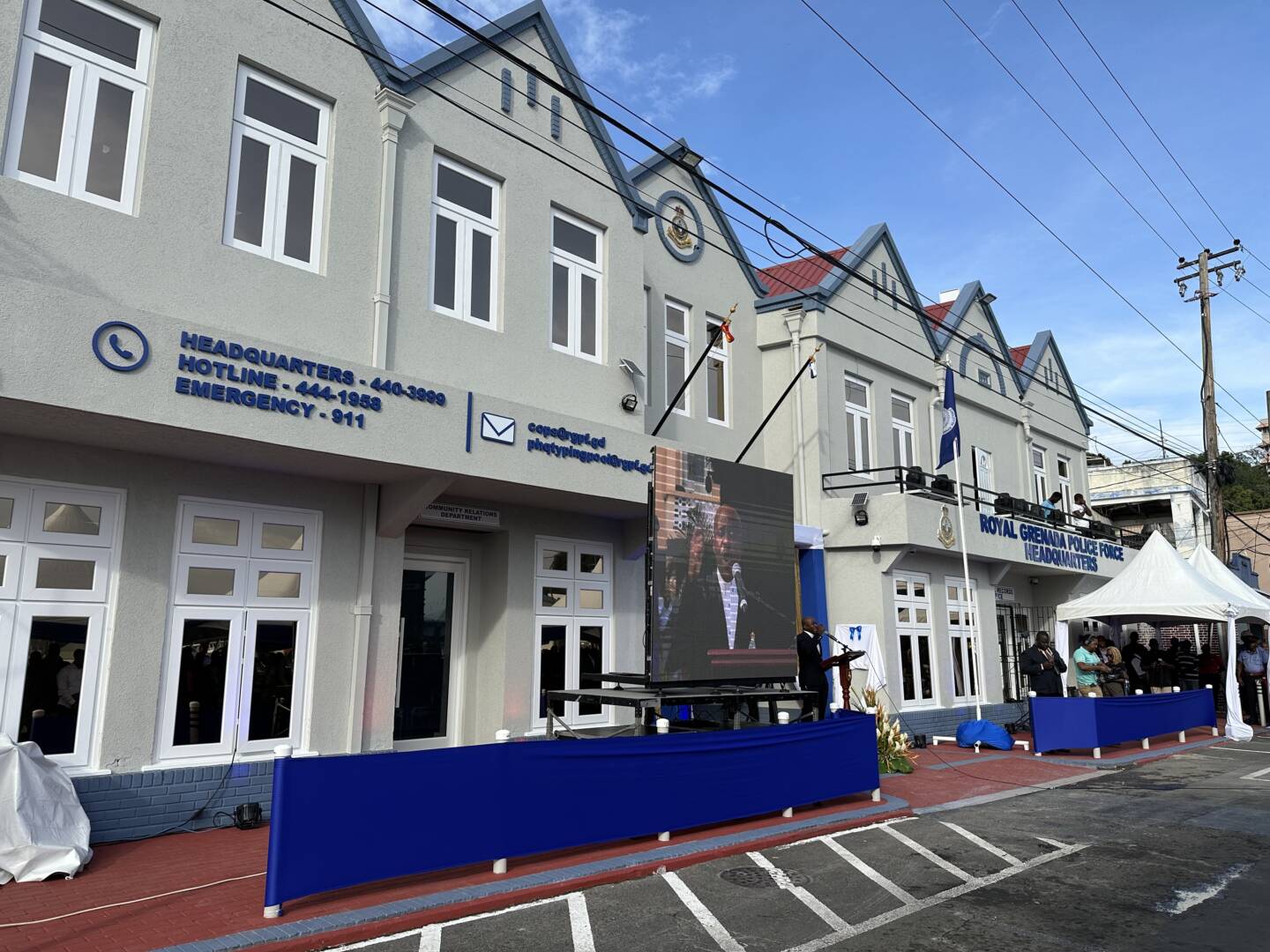
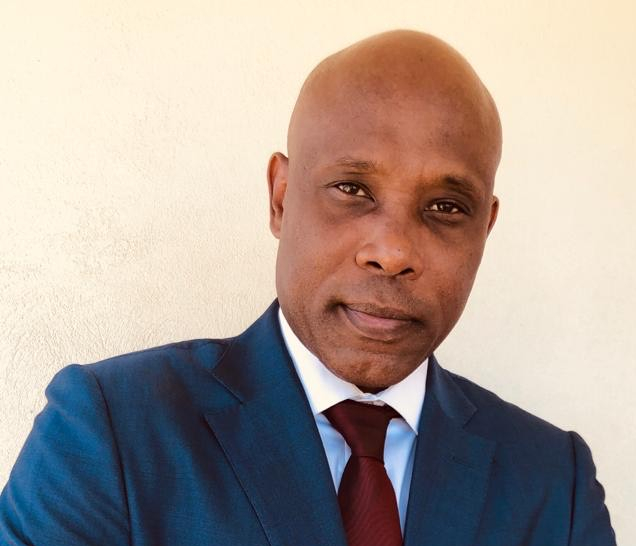
That’s according to Acting Commissioner Randy Connaught during the ribbon-cutting ceremony marking the official opening of the newly refurbished police headquarters on The Carenage in what was formerly the Cable & Wireless building.

On Friday, 28 March 2025, a parade by the RGPF’s corps from its previous headquarters at Fort George towards the new facility on The Carenage marked the start of the ceremony, which included speeches from several key officials. Former Commissioner of Police James Clarkson provided an overview of the history and transformation of what is now called the Royal Grenada Police Force. During the commissioning of the facility, Governor-General Dame Cecile La Grenade unveiled a plaque, followed by a ribbon-cutting ceremony. After Connaught received the facility’s keys, the official commissioning concluded with a cannon salute and the sounding of sirens from fire trucks. Having had to operate out of less-than-ideal working environments for many years, Acting Commissioner Connaught praised the men and women of the RGPF for their hard work and dedication to policing.
The RGPF has made significant improvements in community policing and crime rates. In 2024, the force achieved a clearance rate of 74.8% and confiscated 61 illegal firearms. However, despite a 1.6% increase in overall reported crimes, Connaught stated that the RGPF has also made considerable advancements in modernisation, technology, and training. “This new facility complements our aggressive mission to deliver the highest levels of professional service to our constituents. To us, this facility is more than an aesthetically appealing structure. Transformation within the RGPF is at its best. Our modernisation contemplates the best technological advancement in law enforcement, tools, and applications. To this end, the RGPF will further intensify the capacity building training and will also address the deficiencies identified in our gap analysis and improve service-oriented approach, while maintaining the highest principles of law enforcement services.”
The Acting Commissioner acknowledged former commissioners Edvin Martin and Don Mackenzie for their efforts in securing a permanent home for the police headquarters, which will benefit the organisation. Additionally, while recognising the visionary leadership of Prime Minister Dickon Mitchell in obtaining the new facility, Connaught emphasised the importance of maintaining community partnerships as part of the RGPF’s law enforcement strategy. “The advancements in community policing stakeholder partnerships have been pivotal to our law enforcement strategy. We recognise that citizen security requires a collective effort. Our engagements and community-oriented projects have changed lives, improved communities, and continue to positively impact our policing philosophy.”
Regarding the RGPF’s Crime Statistics and Intelligence-Led Operations, Connaught highlighted the force’s success in solving all but one of the 18 homicides reported last year. He attributed these successes to intelligence-led operations and partnerships with community policing. He noted that despite an increase in overall reported crimes, the RGPF remains committed to improving its efforts.
A significant milestone in the history of the RGPF, as noted by Connaught, is the restoration of pensions, salaries, and fringe benefits. “We have achieved many gains over the years, including the restoration of pensions, increases in salaries and fringe benefits, refurbishment of police stations (which is still a work in progress), the integration of advanced technology, expanded training opportunities, and successful negotiations regarding the pay and grade structure, a longstanding issue that has now been addressed, thanks to the efforts of both past and present negotiating teams.”