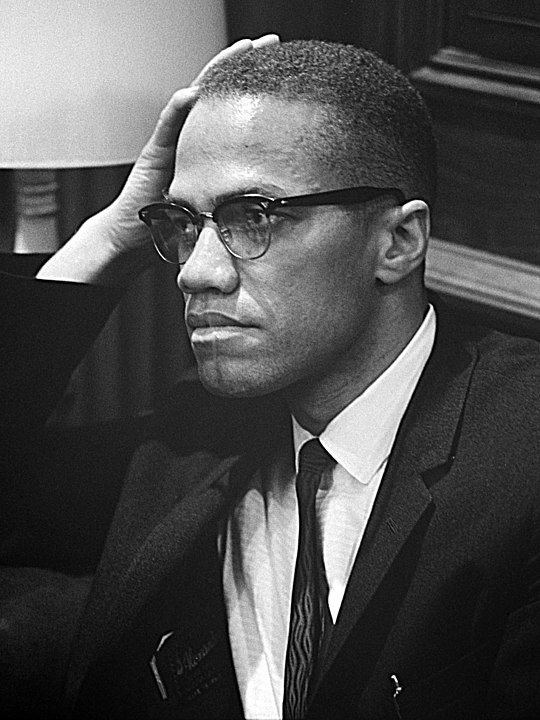







Malcolm Little was born to Louise Norton and Earl Little on 19 May 1925. The man the world came to know as Malcolm X and El-Hajj Malik El-Shabazz was a global civil rights leader and Pan-Africanist.
Louise Norton, Malcolm’s mother, through marriage, became known as Louise Little. She was Grenadian, born in La Digue, St Andrew. Louise was the daughter of Ella Langdon, whose parents — Jupiter and Mary Langdon — were captured from the Motherland and sold into slavery in Grenada.
Malcolm X was a first-generation Grenadian and a third-generation descendant of enslaved Africans. However, throughout his long struggle for civil rights and human rights for Black people in the United States and globally, very little mention was made of his Grenadian roots.
What we do know is that Malcolm X’s parents were active Garveyites. So, it is easy to see why young Malcolm, growing up in a Caribbean household, learned to resist discrimination, oppression and racism. The Littles were staunch supporters of Marcus Garvey and the movement for Black progress in the United States and worldwide.
From a tender age, Malcolm was spoonfed the ideals of Black liberation, racial equality, and Black pride by his Garveyite Grenadian mother. As the world celebrates and commemorates the 100th birthday of Brother Malcolm — we reflect on his life with tremendous pride and admiration.
Malcolm’s work for Black liberation must not be ignored. He is one of the most influential leaders of the 20th century. As Grenadians, we should be proud of his many accomplishments.
Furthermore, Malcolm X is a reminder that throughout history, Grenada has provided the world with transformative and revolutionary social justice leaders — leaders committed to the struggle for equality and liberation. From Julien Fedon plotting, right here in Grenada, a revolt in the hills of Belvedere; Henri Christophe on the battlefields of Haiti; Tubal Uriah Buzz Butler demanding workers’ rights on the streets of San Fernando, Trinidad; to our former Prime Minister Maurice Bishop’s struggle against imperialism. Grenadians have left an indelible mark on history.
It is in this tradition of fighting for justice that we remember the crimes committed against our ancestors — documented crimes against humanity. Lest we forget, Malcolm X’s ancestors — his great-grandparents who toiled on plantations here in Grenada.
Malcolm’s work for Black liberation and Black pride was part of the ongoing struggle for reparatory justice. It is our duty to fight for reparations and to do so in the name of Malcolm, his great-grandparents, and our own ancestors on whose backs empires were built.
Now more than ever, the vision and voice of Malcolm X are needed in a world that has grown increasingly unjust and anti-Black. We will miss his voice, his brilliant oratory, his dedication, and his commitment to struggle — his selfless sacrifice to achieve justice and end racism.
This May, as we celebrate Malcolm’s 100th birthday, his life reminds us that we must continue the struggle for Black liberation, acknowledging that we may never see the fruits of our labour — that seeds we plant today may bear fruits generations from now.
In the meantime, we must continue tilling the soil of justice, watering the seeds of repair, and pruning the branches of hope, all while believing in our hearts that reparatory justice will one day be a reality.
Happy Birthday, Malcolm!
Arley Gill, Chairman
Grenada National Reparations Committee
Editor’s note: Malcolm X was assassinated on 21 February 1965 (60 year ago) in Upper Manhattan, USA.




Doesn’t “first generation Grenadian” mean that he was born in Grenada?