

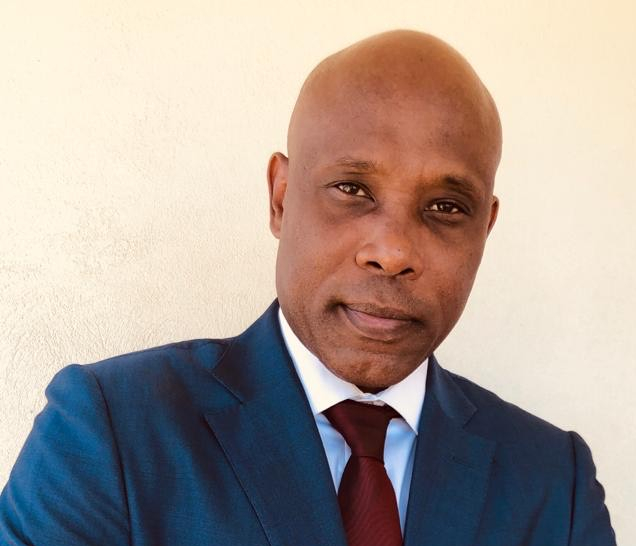






by Prof. C Justin Robinson, Pro Vice-Chancellor and Campus Principal at The University of the West Indies Five Islands Campus
The last 12 months have been an education. Not in what we hoped, but in what we should have known.
We watched the Trump administration assert “America First” with a bluntness that left no room for ambiguity. We watched Canada and Europe accommodate, recalibrate, defer until Greenland was threatened, until a NATO ally was in the crosshairs. Then, suddenly, sovereignty mattered, strategic autonomy became urgent. Decades of comfortable assumptions dissolved in weeks and I have had to revisit my world view. The lesson for the Caribbean could not be clearer, no one is coming to save us. Not Washington, which sees us as backyard or afterthought. Not London, which long ago moved on. Not Ottawa, which has its own recalibrations underway. Not Brussels, which discovered its own vulnerability and has no bandwidth for ours. The rules-based international order we were told to trust has revealed itself as a convenience for the powerful, suspended the moment it becomes inconvenient. We are on our own. The question is whether we will finally act like it.
The closing migration valve is only the most visible symptom of this deeper exposure. For three generations, a critical plank of the Caribbean’s unspoken economic policy was to export our most ambitious people and import their remittances. Every August, the airports tell the story: young graduates with boarding passes to Toronto, Miami, London. Parents holding it together until the car park. WhatsApp groups that become primary relationships, punctuated by visits for Christmas, carnival, weddings, and funerals. Migration absorbed talent our economies could not employ. It eased political pressure our governments could not withstand and funded consumption our productive sectors could not support. We built economies our people endure, not economies they choose.
Now even that escape hatch is closing. Migration policies in the US, UK, and Canada have shifted structurally, not cyclically. But migration was only one dependency among many. We depended on favourable trade arrangements that have eroded. On tourism markets that pandemic and recession can shut overnight. On remittances vulnerable to the economic health of host countries. On an international system we assumed would constrain the powerful and protect the weak. Every one of these dependencies has been exposed. We are not facing a single crisis, we are facing the compound failure of a development model built on external cushions that no longer exist.
We know what works. We have known for decades from the examples of Asian economies. Invest in education before you can afford it, protect infant industries while forcing them to export, build state capacity through practice and diversify relentlessly. And yet we still graduate students into unemployment. Still import food we could grow and energy we could generate. Still watch each island replicate the same failing sectors while regional integration remains a conference topic rather than lived reality. The question is not what works. The question is why we refuse to do it.
The honest answer is uncomfortable. The status quo has beneficiaries. Import dependence enriches the merchants who control distribution. Fragmentation protects politicians whose power depends on national rather than regional constituencies. Scarce productive employment keeps labour cheap for tourism and brain drain relieves governments of demands they cannot meet. We have not failed to develop by accident. We have developed exactly the economies that existing power structures required and too many of us are complicit. External cushions made this sustainable; their disappearance makes it untenable.
What would a Caribbean built for greater opportunity and self-reliance actually look like? Picture the software developer working from Antigua for clients in São Paulo and New York, compensated at global rates, spending locally, raising her children where she was raised. Picture the climate engineer whose expertise, honed in the hurricane belt, is contracted by governments from Fiji to the Philippines. Picture the agricultural scientist whose drought-resistant crops feed the region. Picture the creative professional whose music and film reach global audiences from a studio in Kingston.
And picture this, a Caricom that negotiates as a bloc with a bit more leverage. A regional disaster response that mobilises before external aid arrives because we built the capacity ourselves. A Caribbean that speaks with one voice in international forums, not 15 voices easily divided and dismissed. These are not fantasies; they are choices we have failed to make. Five shifts can begin to make them real.
Make climate adaptation an export industry. Every challenge we face, hurricane resilience, coastal protection, water scarcity, reef restoration, is a challenge the world will face. We can be the laboratory that develops solutions and the salesroom that markets them.
Build digital infrastructure as if our future depends on it because it does. High-speed internet is not an amenity. It is the foundation of every service industry that can pay global wages. Treat it as a public utility and then align education with the sectors it enables.
Keep our energy dollars in the region. We send 5–15% of GDP abroad each year to buy fossil fuels. Renewable energy keeps that money circulating domestically, but only if we require local participation in installation, maintenance, and eventually manufacturing. Energy policy is industrial policy.
Extend OECS-level integration across Caricom. The Organisation of Eastern Caribbean States proves what is possible: a common currency, a single supreme court, genuine labour mobility, coordinated foreign policy. Why does deeper integration work among 8 small islands but stall among fifteen territories? Because smaller players had no choice but to pool sovereignty. Now none of us has a choice. Fifty years of talk is enough.
Forge a common foreign policy. In a fragmenting world, small states survive through collective weight. Fifteen separate foreign ministries pursuing 15 separate agendas is a recipe for irrelevance. A unified Caribbean voice on climate, on trade, on the terms of great power engagement is not idealism. It is survival.
The last year taught Europe that strategic autonomy is not optional. It is teaching Canada the same lesson. The Caribbean should not need more instruction. Development is not a technical problem awaiting the right policy paper. It is a political struggle over who captures the gains from economic activity. Pretending otherwise is why we have so many excellent reports and so little transformation. So here is the call, not to abstractions, but to people.
To our governments: Convene not for communiqués but for commitments. What cannot be measured will not happen. What has no deadline is a wish.
To our private sector: Invest in production, not merely intermediation. Train workers. Pay wages that compete with Toronto. Your children will inherit what you build or fail to build.
To our citizens: Demand more. Every election, every budget, every policy debate, ask whether this builds an economy your children will choose or one they will flee. Political will does not descend from above; instead, it rises from populations that refuse to accept drift.
We built economies our people endure. Now we must build economies they choose. No one is coming to negotiate for us. No one is coming to protect our interests in a fragmenting world. No one is coming to build the economies our children deserve. No one is coming. That is not a tragedy. It is a liberation from the illusion that someone else would do this for us, that the international system would protect us, that we could defer hard choices indefinitely. The only question now is whether we will act like we finally understand.






Well said! Thank you for this, and I hope these messages spread and are accepted.