







by Susan Mains, Art House 473
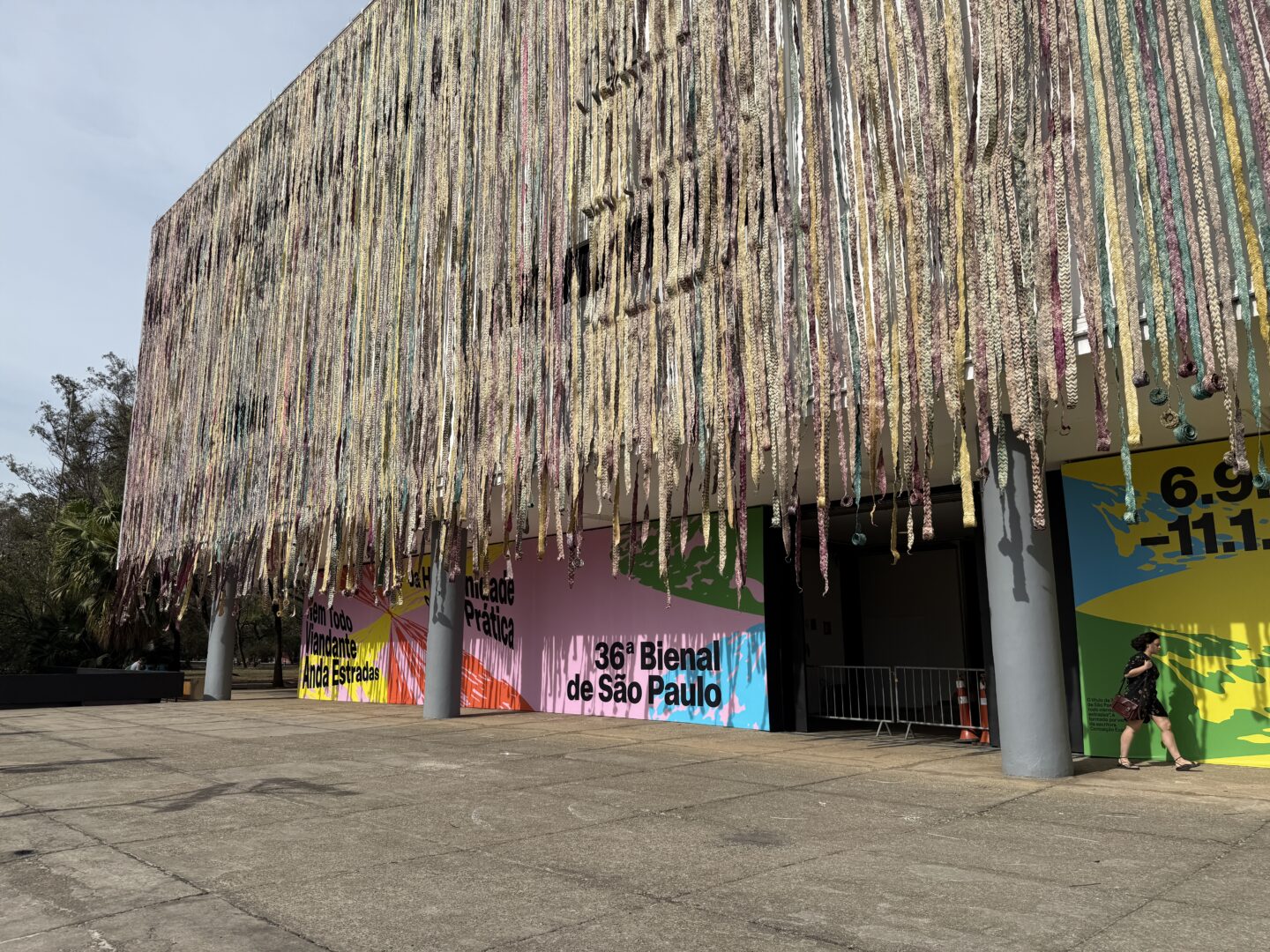
The São Paulo Bienal, founded in 1951 by industrialist Ciccillo Matarazzo, was conceived as Latin America’s answer to the Venice Biennale.
Its ambition was clear from the start: to position Brazil — and the wider region — within the vanguard of global contemporary art. As the second-oldest biennial in the world, it quickly became a stage where international modernism met emergent voices from the Global South.
For the Caribbean islands, it is the closest in geography and intent in art. If Grenada had been looking for a stepping stone to Venice, this may have been the place. However, in 2015, Grenada made its debut at the prestigious Biennale di Venezia, and has shown in Art and Architecture 8 times, and prepariing for 2026. So why the need to travel to Brazil to see this second-oldest? The answer is in the connections.
The 36th São Paulo Bienal (2025), “Not All Travellers Walk Roads — Of Humanity as Practice,” curated by Bonaventure Soh Bejeng Ndikung with his co-curatorial team, opened with a palpable sense of ambition and urgency. Entering the Ciccillo Matarazzo Pavilion, one is immediately met by works that ask less “What do you see?” than “What do you listen to, feel, walk through, remember?” With 120 artists spanning continents and traditions, the bienal overwhelms and enraptures, setting the tone for an edition that privileges multiplicity over singularity. Over 600 journalists were engaged for the press conference, and 1,500 people grappled with setting up the artists’ work. The expectation is that there will be over 700,000 visitors over the next few months, along with the training of 25,000 teachers accompanying 70,000 school children. The admittance is always free, because the desire is that as many people as possible will see, feel, hear and remember the art. It has the potential to be world-changing.
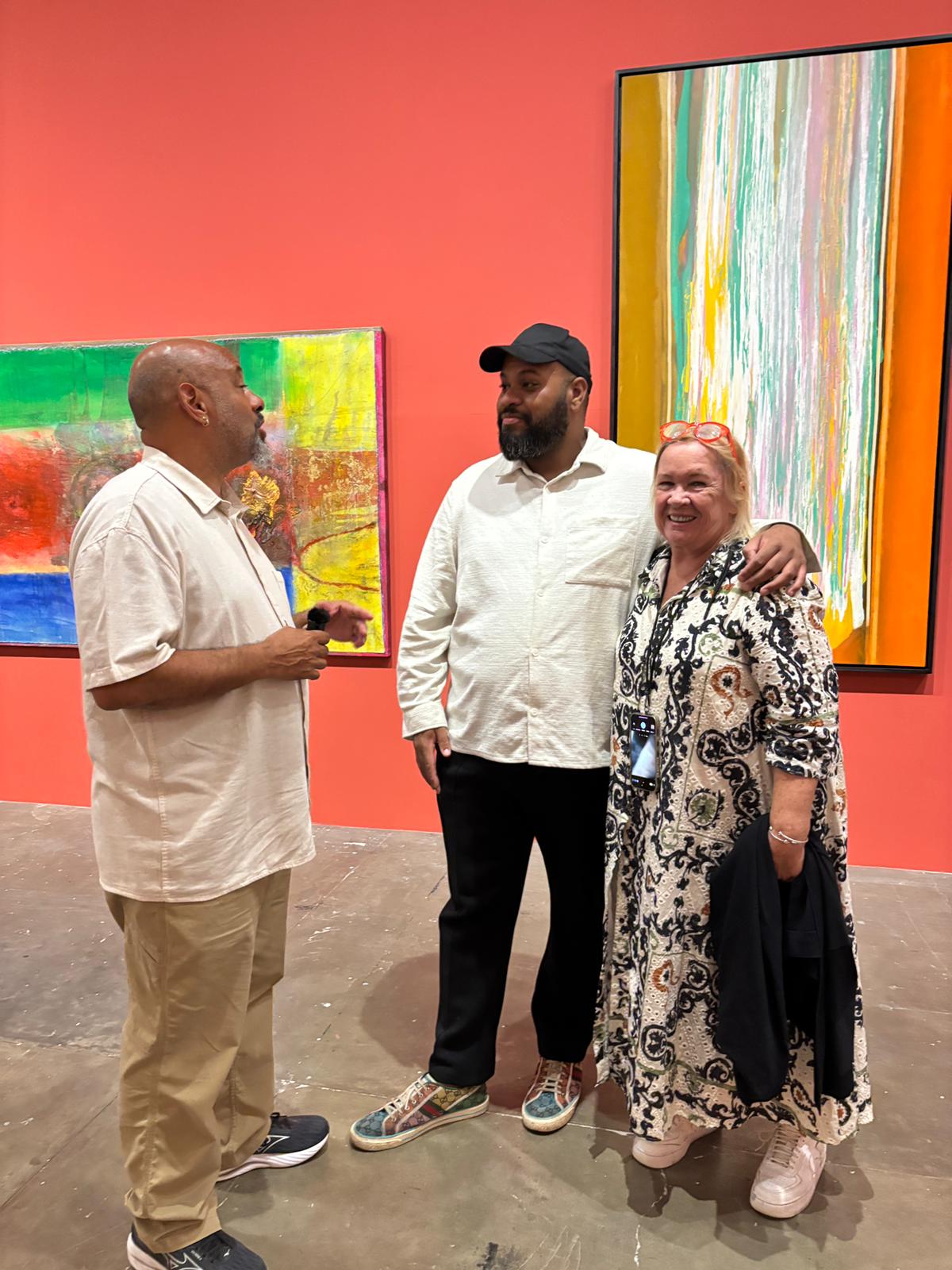
For Susan Mains, of St Paul’s, Grenada, the biggest draw was to see in person the work of Guyanese/British artist Frank Bowling. Some 25 of his works spanning over 60 years were shared on 3 floors. Large-scale paintings that he executes by flooding raw canvas with paint and letting it give the direction, will envelop the viewer and lure one to a dreevay of mystery and magic. Bowling is now over 90 years old, and still works in his studio every day. He was represented by his son Ben Bowling, who passionately described his father’s work and life. Fame is no longer of concern. Several family members work along with Bowling to ensure his legacy. The encounter was inspirational and aspirational.
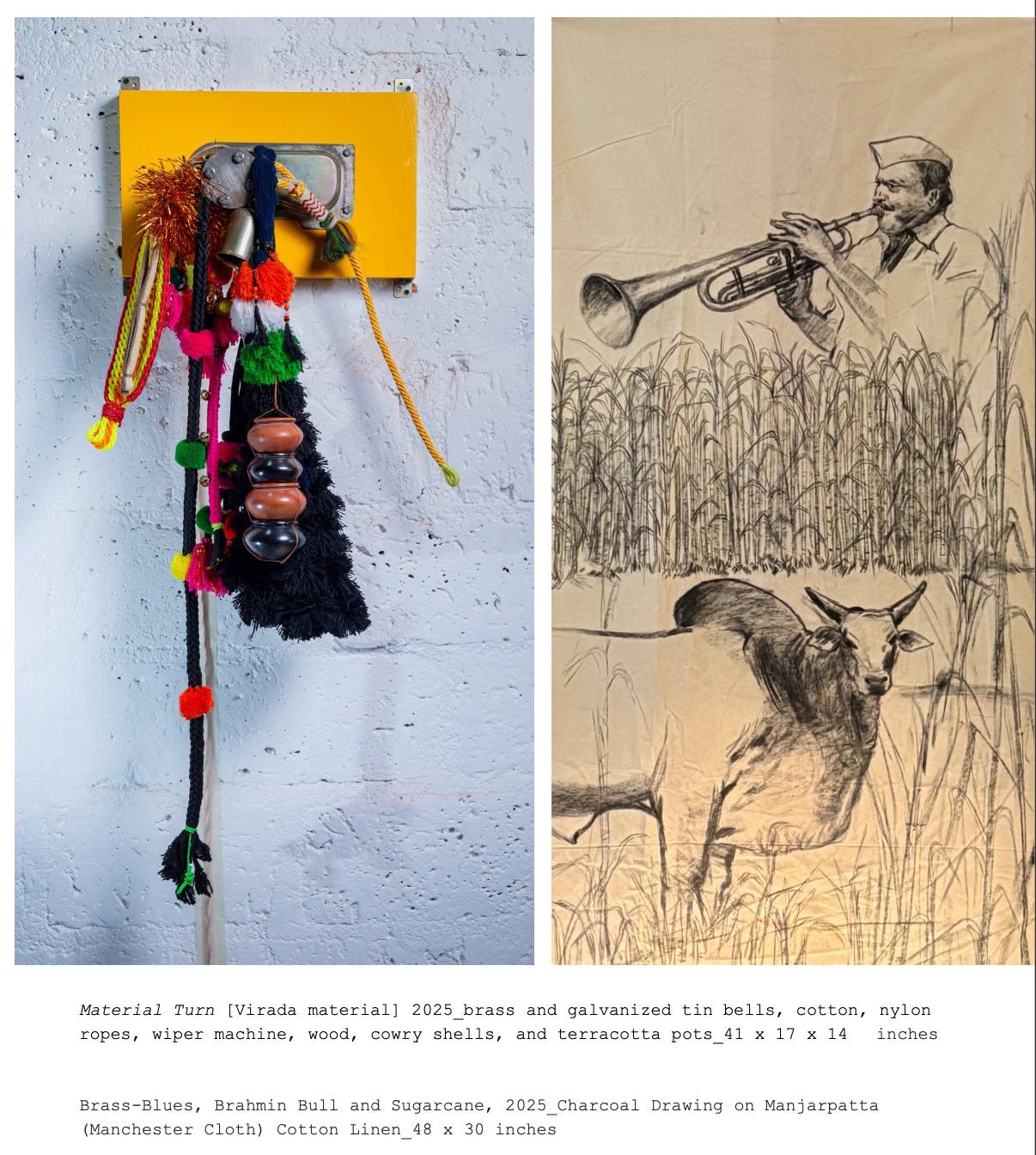
When Prabhakar Kamble was curated by Bonaventure to be in the exhibit, he asked that 12 others of his group from India also be included. It was a bold ask — Kamble and the artists are from the Dalit class. Dalit is a term used for untouchables and outcasts, who represented the lowest stratum of the castes in the Indian subcontinent. These artists would have never been chosen from within, yet their work is compelling and certainly worthy of being seen at this world-class event.
Asher Mains, researcher and writer for art, was intrigued by the work of Rajyashri Goody. Pulped paper taken from religious books was laid on the floor with fragments of broken ceramics, almost representing a beach. Her recipe books displayed captivating titles like “Does your honesty earn you free meals?”
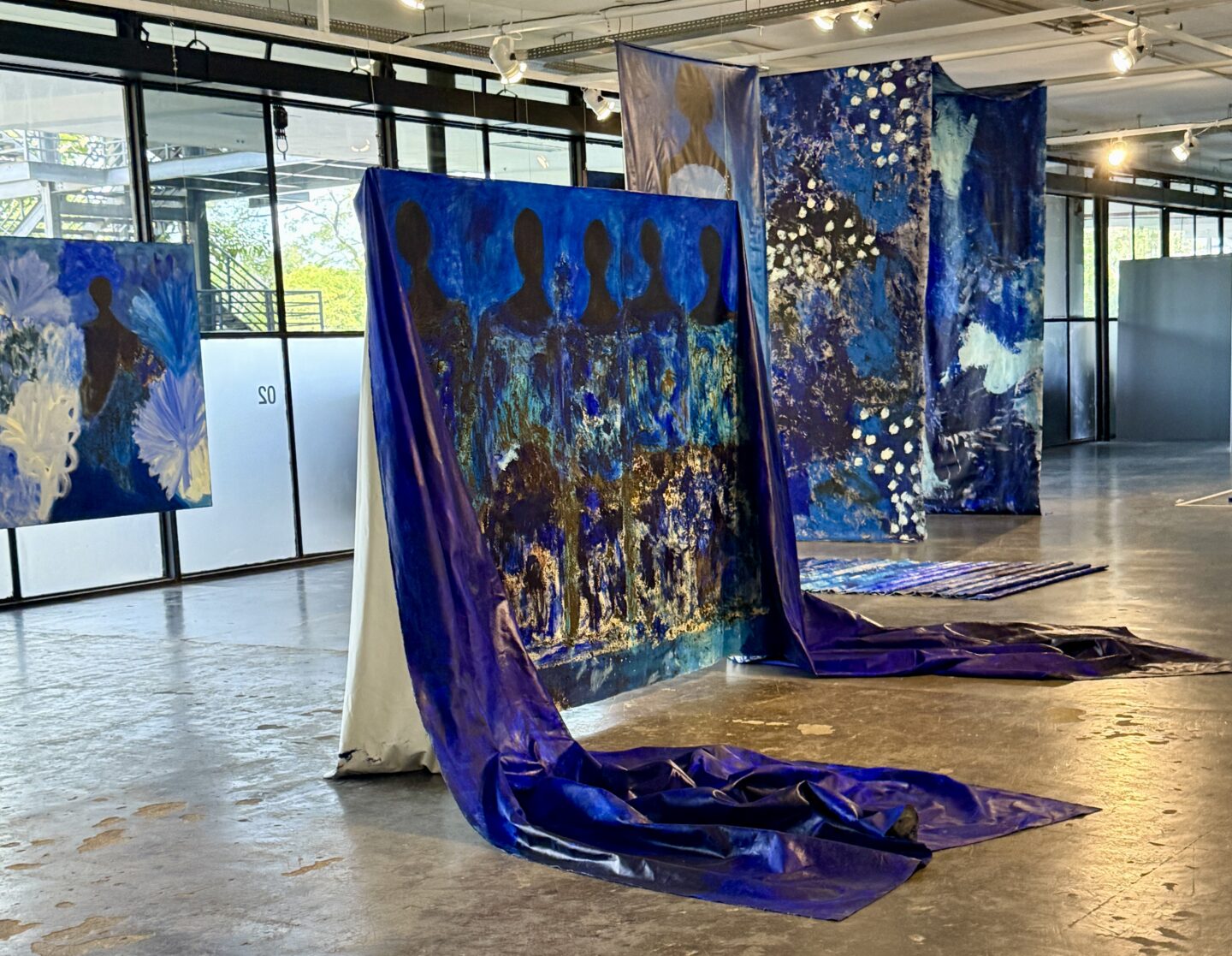
An exquisite installation of paintings by Ruth Ige, a young Nigerian-born artist based in New Zealand, led one into a blue environment of feminine mystique. The canvases, draped, sprawled, with the black figure dominating. Her gesture is reminiscent of that of the late Boscoe Holder of Trinidad. She describes her work as a love letter to the black diaspora and motherland. The love is felt.
For being so close to the Caribbean, there were few representations. Christopher Cozier of Trinidad displayed flags and pendants with the black and red colours of the national flag. The gestures from the game of cricket adorned the pendants, easily recognisable to the inhabitants of British post-colonialism. Firelei Baez, a Dominican Republic artist based in New York, presented a layered work of intricately printed and painted cultural charms.
Aside from having the pleasure of viewing this artwork and meeting old friends, making new connections for Grenada was of the highest priority. The biggest takeaway is that our artists need to have the opportunity to be seen more, both regionally and internationally. Greatness lies within, and to fully develop it, one needs the investment of resources and expertise. We have unique tales to tell about our tiny island with the biggest of hearts. It’s story time.
Follow on Instagram @bienalsaopaulo @arthouse473