










by Linda Straker
- Medium-Term Debt Management Strategy 2025–2027 tabled in Lower House of Parliament on 7 March
- Estimated domestic borrowing projected to be $265 million
- Estimated external borrowing projected to be $560 million
The Ministry of Finance said that in 2025, estimated external borrowing is projected to be $560 million or 67.9% of total borrowing, whereas estimated domestic borrowing is projected to be $265 million or 32.1% of total borrowing.
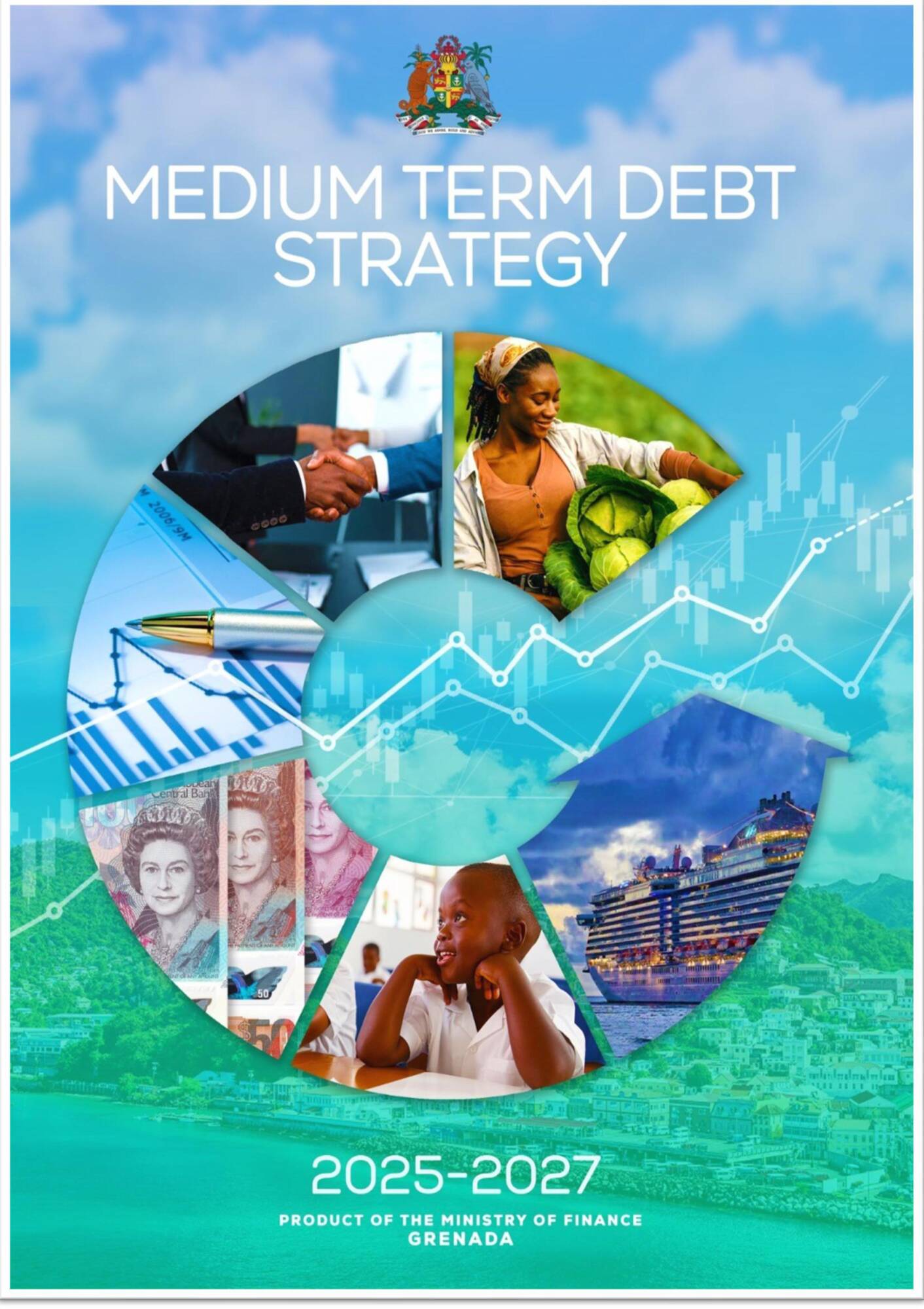
“Of the domestic borrowing, close to 60% represents re-issues of existing Treasury Bills and Notes and will not add to the debt stock,” said the Medium-Term Debt Management Strategy (MTDS) 2025-2027. It was tabled in the Lower House of Parliament on 7 March, the same day that Finance Minister Dennis Cornwall presented the 2025 Budget or Estimates of Revenue and Expenditure.
The 25-page strategy recommended that the Government borrow from multilateral and bilateral creditors on concessional terms in 2025 and that domestic financing should be raised from re-issuing all maturing instruments on the domestic and regional markets.
“It also recommends the introduction of new instruments during the year, including the new homeowners’ bond and that the option to take up additional funding on the RGSM is made available.” The strategy suggested that all external funding through the annual borrowing plan be contracted primarily in US currency (USD), to which the Eastern Caribbean currency (XCD) is pegged, to minimise foreign currency and interest rate risks.
In terms of debt servicing, the strategy said that Grenada’s total national debt payment for the year 2024 was 25.2% of revenue or EC$418 million. “At the end of 2024, Central Government’s debt is estimated to be $2.2 billion of which $ 1.7 billion is external debt and $0.5 billion domestic debt.”
Total debt service for 2024 is $418.1 million or 25.2% of revenue, which includes all Treasury Bills (T-Bills) and Treasury Notes (T-Notes) reissued,” said the report, which was developed, reviewed and finalised by the Macro-Economic Policy Unit and the Debt Management Unit.
At the end of 2024, the composition of the Central Government’s external debt was estimated to be as follows: multilateral creditors 72.5%; bilateral creditors 18.7%; other non-residents 8.7%; and commercial loans 0.1%.
Multilaterals include the International Development Association (IDA), Caribbean Development Bank (CDB), International Monetary Fund (IMF), Organisation for Petroleum Exporting Countries (OPEC), International Bank for Reconstruction and Development (IBRD), International Fund for Agricultural Development (IFAD) and Caricom Development Fund (CDF). Bilateral creditors include The People’s Republic of China, Kuwait, The Republic of Trinidad and Tobago, the EXIM Bank of China, the EXIM Bank of the US, and the Bank of Alba.






This borrowing is to fund travel and useless, poorly executed projects.
What is really happening?
It’s time for the government to reign in businesss who makes billions on the backs of poor hardworking Grenadians and pay their fair share.
Rich folks don’t pay their fair share while they drain Grenada…this will not happen as those businesses and rich folks donate large sums to both political parties. Whoever wins the status quo continues.
There are sufficient economic activities or Government needs to attract meaningful investment instead of selling passports.